






When you take addictive drugs, they hijack your brain’s dopamine reward system. Psychostimulants block your dopamine transporter, while opioids disinhibit VTA neurons, both creating surges that overwhelm normal signaling. Chronic exposure downregulates your D2 receptors by 15-20% and depletes dopamine stores, leaving you in a hypodopaminergic state that persists months after quitting. This neuroadaptation blunts responses to natural rewards and drives compulsive seeking. Understanding these specific circuit disruptions reveals why addiction proves so treatment-resistant. Furthermore, as the brain adapts to these changes, the perceived pleasure derived from everyday activities diminishes, leading to a cycle of negative reinforcement. This highlights dopamine’s relation to addiction, as the need to chase artificial highs becomes paramount, overshadowing the enjoyment once found in simple pleasures.
The Role of Dopamine in Reward and Reinforcement
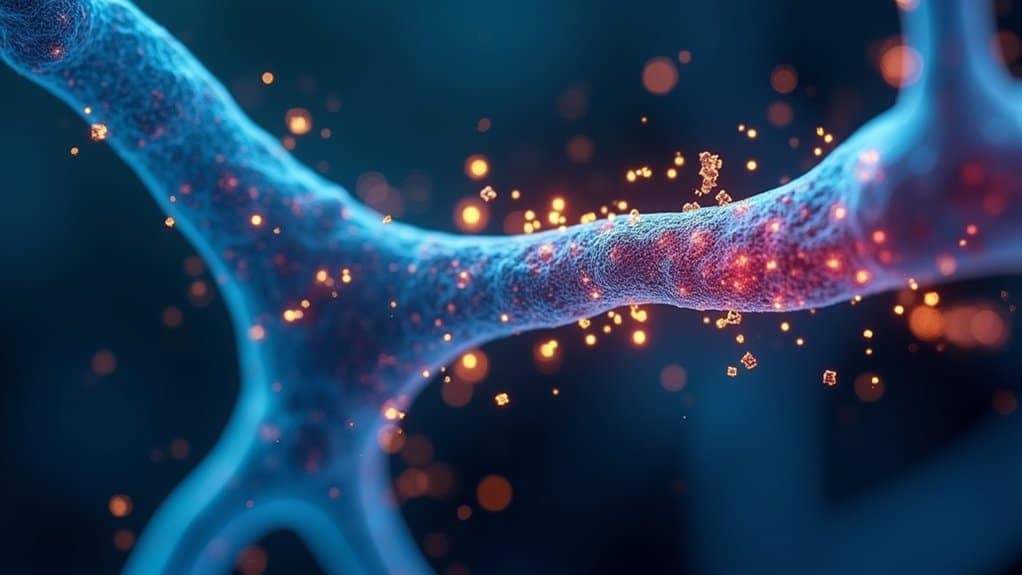
When dopamine neurons fire in response to rewards, they don’t simply signal pleasure, they encode reward prediction error, the difference between what you expected and what you actually received. Unexpected rewards trigger large phasic dopamine bursts from VTA neurons, while predicted rewards produce minimal response. This mechanism drives dopamine reinforcement drugs exploit to hijack learning circuits. Research has shown that drugs interfering with dopamine transmission significantly disrupt the brain’s ability to learn from rewards.
Your reward pathway drugs target operates through the mesolimbic system, where the nucleus accumbens integrates dopaminergic and glutamatergic signals to translate reward information into motivated behavior. Medium spiny neurons in direct (D1) and indirect (D2) pathways balance approach versus avoidance learning. Repeated activation shifts processing from ventral to dorsal striatum, converting goal-directed actions into automatic responses, the foundation of dopaminergic reward disruption underlying addiction. The brain also contains an anti-reward circuit that normally works to attenuate reward-pursuing behavior, but chronic drug use can dysregulate this counterbalancing system. Addictive substances create unnaturally high dopamine surges that overwhelm normal reward processing, either by forcing excessive dopamine release or blocking its reabsorption.
How Different Drugs Hijack Dopamine Signaling
The dopamine signaling machinery that encodes reward prediction error becomes a vulnerability when drugs of abuse commandeer these circuits through distinct molecular mechanisms. Psychostimulants like cocaine block the dopamine transporter, while amphetamines reverse its function, producing dopamine surges drugs generate that exceed natural rewards by two to threefold. Opioids disinhibit VTA dopamine neurons through μ-receptor activation on GABAergic interneurons, amplifying burst firing. Nicotine activates nAChRs on glutamatergic inputs, enhancing release probability at terminals.
These mechanisms share a common outcome: drug-induced neuroadaptation that restructures reward circuitry. You’ll experience reduced D2 receptor availability, blunted responses to natural reinforcers, and strengthened drug-cue associations. This reward center dysfunction shifts motivational priorities toward compulsive drug-seeking, uncoupling dopamine release from environmental contingencies that normally guide adaptive behavior. The extended amygdala becomes increasingly active during withdrawal, generating the anxiety and irritability that drive continued use. Drugs of abuse further modulate gene expression involved in neuroplasticity, creating molecular changes that reinforce addictive behaviors over time. Rather than representing cellular dysfunction, addiction reflects a hijacking of normal learning processes that exploit the brain’s natural reward mechanisms.
Drug Cues, Craving, and Conditioned Learning

Environmental stimuli repeatedly paired with drug administration undergo classical conditioning to become potent conditioned stimuli (CSs) that elicit autonomic arousal, craving, and mesolimbic dopamine release independent of drug presence. These addiction cues drugs encounters trigger through Pavlovian mechanisms acquire three distinct functional properties:
Environmental cues paired with drug use become powerful triggers that hijack the brain’s reward system, sparking cravings without any substance present.
- Conditioned reinforcers that maintain drug-seeking behavior even during abstinence
- Discriminative stimuli signaling drug availability and guiding operant responses
- Incentive motivational triggers that bias attention and increase response vigor
Chronic drug exposure effects strengthen these cue-drug associations through dopamine hijacking drugs produce in reward circuits. Pharmacological interventions targeting this process show promise, as CB1 receptor antagonists like rimonabant and AM251 effectively decrease cue-induced reinstatement of drug-seeking behavior. Meta-analytic evidence demonstrates cue-induced craving increases relapse odds threefold (OR ≈ 3.01; 95% CI, 2.50, 3.63). Cue exposure alone elevates relapse risk (OR ≈ 2.28), confirming conditioned stimuli directly precipitate use independent of baseline craving states. Research with individuals in residential treatment demonstrated significant operant responding bias for preferred drug and paraphernalia images, even when participants reported low craving and negative evaluative reactions to those same images.
Long-Term Effects of Drug Use on the Dopamine System
Chronic exposure to addictive substances fundamentally restructures dopamine neurotransmission through persistent receptor and signaling alterations that outlast acute intoxication by months or years. PET imaging studies demonstrate that dopamine receptor changes drugs induce include significant D2 receptor downregulation across the striatum, observed consistently in cocaine, heroin, alcohol, and methamphetamine addiction. These alterations contribute to a cycle of craving and withdrawal, making recovery challenging. Understanding the factors behind dopamine dependence is crucial for developing effective interventions.
You’ll find that drug reward circuits undergo profound dopamine depletion drugs cause through diminished dopamine cell activity and blunted release responses. When you’re administered stimulants like methylphenidate, your striatal dopamine increases are attenuated compared to non-users, confirming a hypodopaminergic state.
These neuroadaptations reduce prefrontal metabolism in the orbitofrontal cortex and anterior cingulate gyrus, impairing your executive function and inhibitory control. Long-term drug use also erodes grey matter in the prefrontal cortex, further diminishing users’ capacity to rationally consider the consequences of their actions. Critically, these changes persist months after detoxification, driving tolerance, anhedonia, and compulsive drug-seeking behavior. As these structural and functional changes take hold, individuals may find it increasingly difficult to experience pleasure from everyday activities, often leading them to seek out drugs as a primary source of satisfaction. This raises the question: ‘Is Dopamine Addictive?‘ The relentless pursuit of that initial high can create a cycle of dependence that becomes increasingly hard to escape, reinforcing the need for continuous drug use.
Brain Circuits Disrupted by Addiction
Because addiction progressively hijacks multiple brain networks, understanding the specific circuits involved reveals why substance use disorders prove so resistant to treatment and behavioral change. In dopamine drug addiction, three interconnected systems drive compulsive drug seeking:
- Basal ganglia circuit: Drug exposure triggers neuroplasticity from ventral to dorsal striatum, shifting your behavior toward rigid, automatic patterns. Reduced striatal D2 receptor availability directly impairs reward sensitivity. Over time, addicts actually release less dopamine and experience a blunted high, requiring more of the substance to achieve the same effect.
- Extended amygdala: During withdrawal, corticotropin-releasing factor surges through this region, generating anxiety and dysphoria that reinforce continued use through negative reinforcement mechanisms.
- Prefrontal cortex networks: Addiction neurobiology reveals decreased metabolism in orbitofrontal and anterior cingulate cortices, compromising your inhibitory control and decision-making capacity. Research demonstrates that cocaine self-administration produces long-lasting reversal learning deficits in orbitofrontal-dependent tasks even after withdrawal.
This circuit-level disruption creates imbalanced “Go” versus “Stop” signaling, explaining why willpower alone cannot overcome neurobiological dysfunction.
From Reward to Habit: The Shift to Compulsive Drug Use
When you first use a drug, dopamine surges in your ventral striatum encode powerful reward prediction errors, strengthening synaptic connections between the drug experience, environmental cues, and the actions that led to consumption. As you repeat this cycle, control over drug-seeking gradually transfers from ventral striatal circuits to dorsal striatum pathways that specialize in automatic, stimulus-response habits. PET imaging confirms this shift, cue-induced dopamine release in your dorsal striatum correlates directly with addiction severity, reflecting the entrenchment of inflexible drug-taking patterns that persist despite diminishing pleasure. This progression represents addiction as a cycle of spiralling dysregulation of brain reward systems that progressively increases compulsive use and loss of control over drug-taking. The brain’s neuroplasticity offers hope for recovery, as abstinence and behavioral therapies can help form new neural connections that reduce dependence on substances.
Early Reward Learning Phase
The shift from casual drug use to compulsive addiction begins with dopamine’s powerful encoding of reward value during initial exposure. When you first encounter addictive substances, your VTA-to-NAc pathway experiences dopamine surges that far exceed natural reward responses. This relationship between drugs and dopamine creates rapid, intense reinforcement signals that hijack normal learning mechanisms.
Your brain encodes these experiences through three key processes:
- Reward prediction errors signal unexpected drug value, strengthening drug-action associations
- Stimulant dopamine effects produce goal-directed behavior organized around obtaining euphoria
- Substance reward cycle sharpens contextual links between environments, cues, and dopamine spikes
During this phase, your drug-seeking remains sensitive to outcomes and consequences. However, these powerful associative connections bias future choices toward drug-seeking, establishing the neurological foundation for later compulsive patterns. As addiction progresses, control over drug-seeking shifts from ventral striatal to dorsal striatal regions, marking the transition from impulsive to compulsive use.
Dorsal Striatum Habit Formation
As drug use progresses beyond initial experimentation, your brain’s control centers undergo a critical anatomical shift, neural activity migrates from ventral striatal regions toward the dorsal striatum, fundamentally altering how drug-seeking behavior operates. Initially, the dorsomedial striatum (DMS) governs goal-directed drug seeking. However, prolonged exposure recruits the dorsolateral striatum (DLS), establishing automatic, habit-driven behaviors resistant to punishment or outcome devaluation.
This transformation reflects core dependence mechanisms drugs exploit to override voluntary control. Your opioid dopamine response and drug tolerance dopamine adaptations accelerate DLS dominance. Chronic cocaine self-administration demonstrates this, DLS inactivation blocks punishment-resistant seeking, confirming its necessity for compulsive use. Epigenetically, chronic exposure increases histone acetylation while downregulating HDAC3, removing molecular brakes on habit formation and creating persistent vulnerability to compulsive drug-seeking behavior. During this process, DLS neurons develop task-bracketing activity patterns that mark the beginning and end of drug-seeking sequences, encoding automatic behaviors as chunked units. This shift in striatal control occurs within the broader cortico-basal ganglia-thalamic circuit that regulates the development and maintenance of addictive behaviors. These neuroadaptive changes highlight the challenges faced in treatment, as traditional methods may not sufficiently address the entrenched patterns of drug-seeking behavior. Consequently, drug detox treatments must incorporate strategies that target these neurobiological mechanisms to enhance their effectiveness and support lasting recovery.
Frequently Asked Questions
Can Dopamine Levels Return to Normal After Years of Sobriety?
Yes, your dopamine levels can return to normal after years of sobriety. Brain imaging studies show dopamine transporter availability approaches near-normal levels by 14 months of abstinence. Your recovery depends on several factors: duration and intensity of prior use, substance type, co-occurring mental health conditions, and environmental support. You’ll typically experience significant dopamine system restoration within 90 days, though complete normalization of receptor function and signaling may extend beyond one year.
Why Do Some People Become Addicted While Others Using the Same Drug Don’t?
Your genetic makeup accounts for 40, 60% of your addiction vulnerability. Variations in genes like DRD2 and CHRNA2 affect how your dopamine system responds to drugs. However, your genes don’t act alone, environmental factors like trauma, stress, and early exposure trigger epigenetic changes that alter gene expression in your reward pathways. This gene-environment interaction determines whether drug use hijacks your motivation circuits or remains a controllable experience.
Are There Medications That Can Restore Normal Dopamine Function in Recovering Addicts?
Yes, several medications can help restore your dopamine function during recovery. Methadone and buprenorphine activate opioid receptors to stabilize dopamine signaling, while naltrexone blocks receptors to normalize reward processing. Dopamine agonists like pramipexole directly stimulate your depleted receptors. Varenicline and bupropion enhance dopamine activity in specific brain regions. These pharmacological interventions work by compensating for your brain’s reduced natural dopamine production while gradually supporting receptor repair and neurotransmitter balance restoration.
Does Addiction to Behavioral Activities Like Gambling Affect Dopamine Similarly to Drugs?
Yes, gambling addiction recruits your mesolimbic dopamine pathway similarly to drugs. Your ventral striatum releases heightened dopamine during gambling episodes, particularly during reward uncertainty and “near-miss” outcomes, sometimes matching actual wins in dopaminergic response. You’ll develop tolerance-like adaptations as your reward system becomes desensitized, driving escalation of gambling behavior. However, research indicates partial mechanistic overlap, with distinct patterns of striatal activation during reward receipt compared to substance addictions.
Can Exercise or Meditation Help Repair Dopamine Systems Damaged by Drug Use?
Yes, you can repair your dopamine system through structured exercise. Research demonstrates that 8 weeks of aerobic training plus resistance exercise increases striatal D2/D3 receptor availability by approximately 15% in methamphetamine-dependent individuals. Exercise activates your mesolimbic reward pathway, normalizes dysregulated dopamine signaling, and reduces drug cravings. While meditation shows promise for neural recovery, direct evidence for dopamine receptor repair remains limited compared to exercise’s documented neurobiological effects.