



Kratom is the only herbal drink that directly mimics opioids by binding to your brain’s mu-opioid receptors, the same sites morphine and oxycodone activate. Its active alkaloids, mitragynine and 7-hydroxymitragynine, produce classic opioid effects including pain relief, sedation, and physical dependence. Other herbal drinks like CBD or kava work through completely different pathways (endocannabinoid and GABA systems) and don’t trigger opioid receptors. Understanding kratom’s specific mechanisms reveals both its potential benefits and serious risks. Kratom is the only herbal drink that directly mimics opioids by binding to your brain’s mu-opioid receptors, the same sites morphine and oxycodone activate. Its active alkaloids, mitragynine and 7-hydroxymitragynine, produce classic opioid effects including pain relief, sedation, and physical dependence. Concerns about herbal shots dependence often center on kratom products because of this opioid-like mechanism. Other herbal drinks like CBD or kava work through completely different pathways (endocannabinoid and GABA systems) and don’t trigger opioid receptors. Understanding kratom’s specific mechanisms reveals both its potential benefits and serious risks.
What Makes Kratom the Primary Opioid-Mimicking Herbal Drink
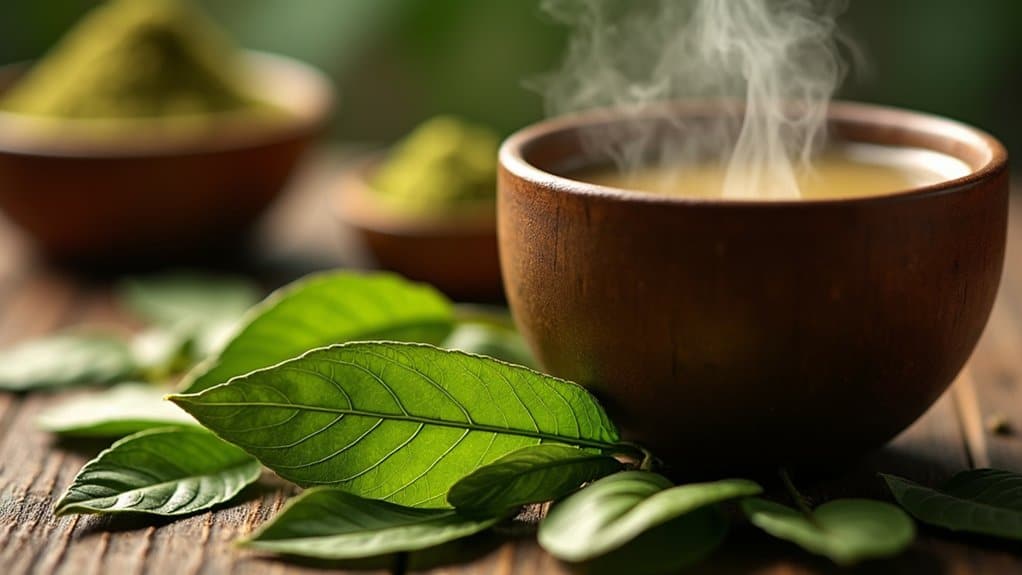
The ethnobotanical history of kratom reveals centuries of traditional use for pain and fatigue in Southeast Asia. Today’s kratom marketing strategies often emphasize its “natural opioid” properties, positioning it as an alternative to conventional analgesics. Animal studies confirm kratom’s antinociceptive effects follow time courses similar to opioid drugs. Regulatory bodies increasingly classify kratom distinctly among herbal products, recognizing its unique opioid-mimicking profile. The active compounds mitragynine and 7-hydroxymitragynine bind to the same brain receptors as morphine and oxycodone, explaining kratom’s ability to produce similar pain-relieving and euphoric effects. These compounds may produce classic opioid-related effects including sedation, nausea, constipation, physical dependence, and respiratory depression that may lead to death. Users report experiencing stimulant effects at low doses while higher doses produce sedative properties similar to traditional opioids.
How Kratom Alkaloids Interact With Opioid Receptors in the Brain
Kratom’s opioid-mimicking effects trace directly to how its alkaloids engage opioid receptors in brain tissue. When you consume kratom, mitragynine and 7-hydroxymitragynine bind μ-, κ-, and δ-opioid receptors, with strongest affinity at the μ-opioid receptor. Differential opioid receptor subtype selectivity explains why these compounds produce varying effects. Both compounds bind to human μ-opioid and κ-opioid receptors with nanomolar affinity, demonstrating their potent receptor interactions. Kratom’s opioid-mimicking effects trace directly to how its alkaloids engage opioid receptors in brain tissue. When you consume kratom, mitragynine and 7-hydroxymitragynine bind μ-, κ-, and δ-opioid receptors, with strongest affinity at the μ-opioid receptor. Differential opioid receptor subtype selectivity explains why these compounds produce varying effects. In alkaloid withdrawal symptoms explained, this receptor activity helps clarify why discontinuation can trigger opioid-like withdrawal features. Both compounds bind to human μ-opioid and κ-opioid receptors with nanomolar affinity, demonstrating their potent receptor interactions.
| Alkaloid | MOR Affinity | Relative Potency vs. Morphine |
|---|---|---|
| Mitragynine | Moderate | Baseline |
| 7-HMG | ~14× higher | ~1,071% |
| Mitragynine pseudoindoxyl | High | ~3,467% |
Disparities in intrinsic efficacy between alkaloids determine analgesic strength. Both compounds function as partial agonists, favoring G protein signaling over β-arrestin recruitment. This biased signaling pattern distinguishes kratom from classical opioids. Naloxone reverses these effects, confirming receptor-mediated mechanisms underlie kratom’s central analgesic activity. While mitragynine acts as a partial μ-opioid receptor agonist, 7-hydroxymitragynine demonstrates full agonist activity at this same receptor subtype, contributing to its greater potency.
Kratom Tea and Wellness Shots Used for Opioid Withdrawal Self-Treatment
Because kratom’s partial agonist activity at μ-opioid receptors produces analgesic effects without full receptor activation, many individuals now use kratom tea and commercial wellness shots to self-treat opioid withdrawal symptoms. Animal studies demonstrate that kratom tea considerably reduces withdrawal behaviors like jumping and rearing without causing respiratory depression. Users report consuming kratom multiple times daily to maintain functionality and manage symptoms. Researchers at University of Florida have conducted studies evaluating lyophilized kratom tea containing over 20 alkaloids that produced significant pain-relieving effects.
Moderated kratom use for withdrawal management shows promise in preclinical data, with efficacy comparable to methadone and buprenorphine but fewer side effects. However, quality control concerns with unregulated kratom products create substantial risks. Some products available in the West are highly concentrated extracts or have been formulated with manipulated alkaloid content. Some users combine kratom with substances like modafinil, resulting in adverse events including seizures. While kratom withdrawal proves milder than opioid withdrawal, symptoms last longer. Mitragynine, the predominant alkaloid in kratom, binds to mu- and kappa-opioid receptors while having additional receptor affinities that may help mitigate withdrawal. You should understand that long-term effects remain poorly characterized despite anecdotal benefits.
Health Risks and Regulatory Warnings About Kratom-Based Beverages
Although kratom beverages offer perceived benefits for pain and withdrawal management, they carry significant acute health risks that warrant careful consideration. Many wellness drinks with hidden dangers are marketed as natural alternatives, but consumers should remain vigilant about their ingredients. For instance, certain brands may use herbal supplements that can interact negatively with medications or exacerbate existing health issues. It is crucial to thoroughly research any product before incorporating it into your routine to avoid unintended consequences.
When you consume kratom drinks, mitragynine and 7-hydroxymitragynine activate mu-opioid receptors, triggering dose-dependent toxicity. At doses exceeding 8 grams, you face respiratory depression, seizures, and multi-organ damage affecting your liver, kidneys, and cardiovascular system.
| Risk Category | Key Findings |
|---|---|
| Cardiovascular | 51.9% of adults ≥70 experience tachycardia, arrhythmias |
| Hepatotoxicity | Cholestatic and mixed-pattern hepatitis documented |
| Dependence | 2.4% develop moderate-to-severe use disorder |
| Fatalities | 91 kratom-positive deaths identified (2016, 2017) |
| Neonatal | Abstinence syndrome in exposed newborns |
Regulatory oversight challenges compound these dangers. Inconsistent product quality means you can’t reliably predict alkaloid concentrations, increasing overdose risk when combining kratom with CNS depressants. Poison control centers reported a 682% increase in kratom exposures between 2011-2017, reflecting the escalating public health concern surrounding these products.
Other Herbal Drinks Marketed for Pain Relief and How They Compare to Kratom
Several herbal beverages compete with kratom in the pain-relief market, but they work through fundamentally different receptor systems. CBD drinks target endocannabinoid signaling rather than opioid receptors, while herbal combinations with kava modulate GABAergic pathways to produce anxiolytic effects. Commercial relaxation tonics containing valerian, passionflower, or chamomile similarly act on GABA receptors, not the mu-opioid sites kratom activates.
You’ll find the evidence base for these alternatives considerably weaker than approved analgesics. CBD shows mixed results for neuropathic pain, while kava may reduce pain perception indirectly through muscle relaxation. Neither produces kratom’s opioid-like effects or carries its dependence risk. Kratom’s effects stem from mitragynine and 7-hydroxymitragynine, bioactive alkaloids that interact with opioid receptors in the brain. Despite claims about its benefits, no FDA-approved uses currently exist for kratom.
The safety profiles differ markedly. CBD causes mainly fatigue and GI upset, whereas kava poses liver toxicity concerns. Both lack kratom’s documented withdrawal syndrome and addiction potential. Products like “Feel Free” combine both kava and kratom, marketed as a natural alternative to alcohol despite significant safety concerns.
What starts as a simple herbal drink can sometimes surprise you, creating effects that feel stronger and harder to control than expected, leaving you confused and concerned. If you are wondering whether any herbal drinks mimic opioids and how to safely address dependence, you are not alone in seeking guidance. At outpatient detox NJ, we help connect people with trusted treatment centers and recovery resources, including Opiate Detox, so you can find support and take the first step toward regaining control. Call +1-844-866-4590 and begin your journey toward safer, healthier choices today.
Frequently Asked Questions
Can Kratom Drinks Cause Withdrawal Symptoms Similar to Prescription Opioids?
Yes, kratom drinks can cause withdrawal symptoms similar to prescription opioids. Kratom’s active compounds act as partial agonists at µ-opioid receptors, so chronic use leads to tolerance and physical dependence. When you stop, you’ll likely experience muscle aches, nausea, anxiety, and cravings, mirroring opioid withdrawal. Kratom dependence levels vary based on dose and duration. Kratom withdrawal management often follows opioid protocols, including clonidine or buprenorphine, though symptoms are typically milder.
Why Do Wellness Drinks Combine Kratom With Kava Together?
Wellness brands combine kratom with kava because their mechanisms complement each other, kava’s GABAergic calming pairs with kratom’s opioid-receptor activity to create what marketers call “social ease” or “chilled energy.” You’re getting potential health benefits like relaxation and mood elevation from two different receptor pathways simultaneously. However, this combination raises potential legal concerns since kratom’s regulatory status varies, and the additive sedation and liver strain aren’t well-studied in repeated liquid doses.
Is Kratom Legal to Purchase in the United States?
You can legally purchase kratom at the federal level since it’s not a DEA-scheduled substance, though federal regulations don’t guarantee product safety or quality. However, the legal status varies considerably by state, six states have completely banned it, including Alabama, Arkansas, and Indiana. Before buying, you’ll need to check your specific state and local laws, as some jurisdictions enforce stricter bans despite statewide legality.
How Many Kratom Drinks per Day Lead to Dependence?
Daily kratom consumption, especially 2, 3 doses or more, significantly increases your dependence risk. Following kratom dosage guidelines, you should limit intake to 2, 3 days per week maximum. When you dose daily, kratom’s mu-opioid receptor activity triggers tolerance, requiring higher amounts to achieve the same kratom effects and side effects. Case evidence shows progression from 1, 2 drinks daily to 6, 8 drinks within months, with withdrawal symptoms upon cessation confirming physical dependence development.
Are Kratom Wellness Shots Stronger Than Traditional Kratom Tea?
Yes, kratom wellness shots are substantially stronger than traditional kratom tea. Shots contain concentrated extracts (2:1 to 50:1 ratios) that deliver higher mitragynine density to your mu-opioid receptors, producing more potent kratom strains effects in smaller volumes. You’ll experience faster onset, around 15 minutes versus 45-60 minutes with tea. Traditional tea loses some alkaloids through heat and filtration, while kratom supplement effects from shots hit harder but typically don’t last as long.