






Phentermine isn’t directly targeted on a standard 5-panel drug test, but you’ll likely trigger a preliminary positive result for amphetamines. This happens because phentermine‘s molecular structure closely resembles amphetamine, causing cross-reactivity in immunoassay screening. The test can’t distinguish between your prescription medication and illicit stimulants during initial screening. However, confirmatory testing using GC-MS or LC-MS/MS will accurately identify phentermine’s unique signature. Understanding the verification process helps you prepare properly. While phentermine may not show up in drug tests designed specifically for common substances, you should still be cautious about its potential effects on the results. Knowing that will phentermine show up in drug test scenarios can empower you to communicate with your healthcare provider if you’re required to take a drug test. It’s important to disclose any medications you are taking, including phentermine, to avoid misinterpretations of your test results.
Does Phentermine Show Up on a 5-Panel Drug Test?

When you’re prescribed phentermine and facing a workplace screening, understanding how standard drug panels work can guarantee unnecessary anxiety is avoided. A 5 panel drug test screens for marijuana, cocaine, opiates, amphetamines, and PCP, phentermine isn’t specifically targeted.
Phentermine isn’t on the standard 5-panel test, but knowing what’s screened helps you approach workplace drug testing with confidence.
However, phentermine’s classification as a sympathomimetic amine and central nervous system stimulant creates complications. Your prescription weight loss medication shares structural similarities with amphetamine, causing immunoassay screening antibodies to cross-react. This triggers preliminary positives on urine drug test results. Phentermine is typically prescribed to patients with a BMI of 30 or higher, or those with lower BMI who have weight-related health conditions. However, phentermine’s classification as a sympathomimetic amine and central nervous system stimulant creates complications. Your prescription weight loss medication shares structural similarities with amphetamine, causing immunoassay screening antibodies to cross-react and trigger preliminary positives. This is why questions like does phentermine show up in urine drug screen arise, as standard tests may initially flag it before confirmatory analysis distinguishes the compound. Phentermine is typically prescribed to patients with a BMI of 30 or higher, or those with lower BMI who have weight-related health conditions.
Don’t panic if this occurs. Confirmatory drug testing using gas chromatography-mass spectrometry precisely identifies molecular structures, distinguishing phentermine from illicit substances. These advanced methods prevent misreporting and safeguard legitimate prescription holders. It’s worth noting that phentermine is classified as a Schedule IV controlled substance and is not known to be habit-forming.
You should disclose your phentermine prescription before testing. Providing documentation ascertains laboratories interpret results correctly, avoiding unnecessary complications from initial screening flags. Since phentermine has a half-life of about 24 hours, it can take up to four days to leave your body completely, which affects how long detection remains possible.
How Long Phentermine Stays Detectable by Test Type
Understanding how long phentermine remains detectable depends entirely on the type of drug test administered. Your detection window urine testing offers spans 1-4 days, while phentermine metabolism influences clearance rates considerably. Because phentermine hydrochloride shares structural similarities with amphetamines, amphetamine immunoassay sensitivity can trigger a false positive amphetamine result during screening.
| Test Type | Detection Window | Key Considerations |
|---|---|---|
| Urine | 1-4 days | Most common; affected by pH levels |
| Blood | Up to 24 hours | Measures current drug metabolite detection |
| Saliva | 24-48 hours | Useful for recent use verification |
| Hair | Up to 90 days | Reveals long-term usage patterns |
Drug testing thresholds vary by laboratory, making prescription disclosure essential. You should pursue prescription medication verification with the medical review officer to prevent misinterpretation when an amphetamine screen returns presumptive positive results.
Why Phentermine Triggers False Positives for Amphetamines
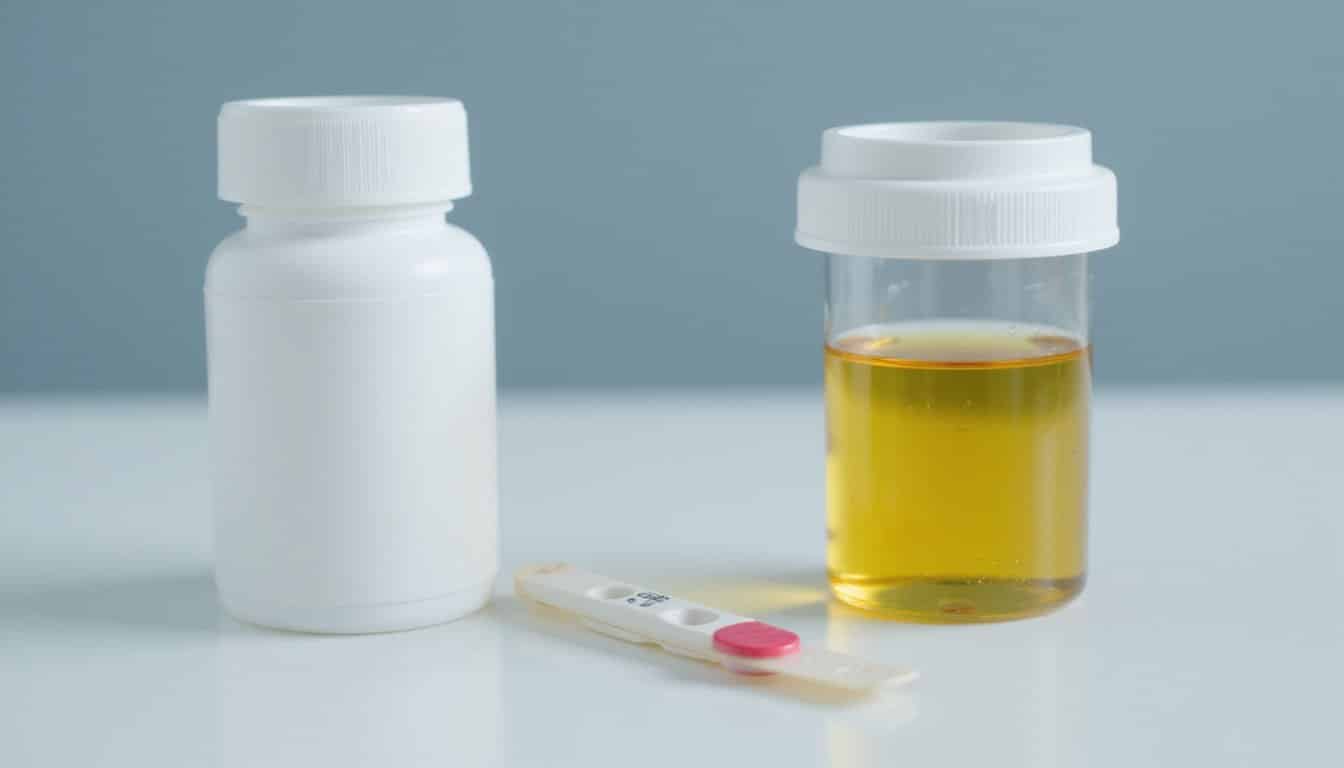
Because phentermine shares a nearly identical molecular backbone with amphetamine, immunoassay-based drug screens frequently misidentify it as an illicit stimulant. The antibodies in these tests recognize structural epitopes common to amphetamine class substances, including methamphetamine, ephedrine, and pseudoephedrine. When you take Adipex-P or Lomaira, the screening can’t distinguish your prescription from illicit drugs.
Your urine sample triggers cross-reactivity because phentermine’s sympathomimetic properties mirror compounds regulated under the Controlled Substances Act. Unlike fenfluramine, which acts differently, phentermine directly stimulates norepinephrine release, producing detectable metabolic signatures similar to street amphetamines.
The Substance Abuse and Mental Health Services Administration requires confirmatory testing through a toxicology laboratory using GC-MS or LC-MS/MS. These advanced methods identify phentermine’s precise molecular structure, separating it from illicit substances and resolving false-positive results accurately.
How Follow-Up Testing Proves You’re Not Using Illegal Drugs
A preliminary positive result on an immunoassay screen doesn’t mean you’ve failed your drug test, it simply triggers the next phase of analysis. When immunoassay detects amphetamine-like substances, confirmatory testing automatically follows in standard workplace drug testing protocols.
Gas chromatography-mass spectrometry and liquid chromatography-tandem mass spectrometry provide the specificity needed to distinguish phentermine from illicit amphetamines. These advanced methods identify your medication’s unique molecular signature, effectively clearing the false positive.
During confirmatory review, your prescription documentation strengthens your case. Providing valid prescription records allows testing authorities to verify legitimate use alongside laboratory confirmation.
You’ll find these confirmatory methods highly reliable, military testing programs explicitly confirm that phentermine doesn’t register as a positive result. The two-step process protects you from unfounded accusations while ensuring accurate reporting of actual illicit substance use. It’s important to understand whether will phentermine show up on a saliva drug test, especially if you’re undergoing regular screenings. Many individuals concerned about their medications often seek clarity on this issue, as the implications can affect employment and legal situations. Knowing how substances metabolize and what tests can detect them can help alleviate unnecessary stress.
What Phentermine Users Should Do Before a Drug Test

When you’re taking phentermine and facing an upcoming drug test, proactive disclosure remains your most effective strategy for avoiding complications. Understanding phentermine pharmacokinetics helps you plan accordingly, detection time phentermine typically ranges 2-4 days, determining how long phentermine stays in urine.
| Preparation Step | Required Action |
|---|---|
| Prescription documentation requirements | Gather pharmacy records and physician confirmation |
| Disclose medications before drug test | Notify testing administrators prior to collection |
| Medical explanation for positive result | Prepare written statement from prescriber |
| Prescription verification process | Provide prescribing physician contact information |
| MRO verification process | Submit documentation to Medical Review Officer |
Following employer drug testing guidelines, you’ll need to complete drug test reporting procedures accurately. The MRO verification process allows officials to distinguish legitimate prescriptions from illicit substances, ensuring your medical explanation for positive result receives proper consideration.
Take the First Step Toward Recovery
If prescription drug addiction is taking over your life or someone you love, you do not have to face it alone. At New Jersey Outpatient Detox, we are ready to connect you with the right Prescription Stimulant Detox Programs to help you break free from dependency and live a healthier life. Call (844) 866-4590 today and start your journey to recovery.
Frequently Asked Questions
Can Drinking Extra Water Help Flush Phentermine Out of My System Faster?
No, drinking extra water won’t flush phentermine from your system faster. Your body eliminates phentermine through fixed metabolic pathways governed by its 19-24 hour half-life and renal excretion rates. Hydration doesn’t accelerate these biochemical processes. Excessive water intake may actually backfire, diluted urine samples often get flagged as invalid, triggering a retest. You’re better off allowing natural elimination, which typically takes 4-6 days in healthy adults with normal kidney function.
Will My Employer Know I’m Taking Weight Loss Medication After Testing?
Your employer typically receives only final confirmed results, not preliminary findings. If phentermine triggers an initial amphetamine positive, confirmatory testing using GC-MS or LC-MS/MS identifies the specific compound. The Medical Review Officer reviews your prescription documentation before reporting results. With valid prescription verification, your confirmed report shows a negative result, your employer won’t learn you’re taking weight loss medication. You should disclose your prescription to the testing facility beforehand to guarantee proper processing.
Does Phentermine Show up Differently on Drug Tests for Women Versus Men?
No, phentermine doesn’t show up differently on drug tests based on your gender. Standard 5-panel immunoassay screens and confirmatory GC-MS or LC-MS/MS testing detect phentermine’s molecular structure identically in both men and women. While individual metabolism rates, kidney function, and urinary pH affect your detection window, current research identifies no gender-specific variations in test outcomes. You’ll experience the same cross-reactivity potential for amphetamine false positives regardless of sex.
Can Over-The-Counter Diet Pills Also Trigger False Positives Like Phentermine Does?
Yes, over-the-counter diet pills can trigger false positives on immunoassay drug screens. When you take OTC appetite suppressants containing compounds structurally similar to amphetamines, the antibodies in preliminary tests may cross-react with these molecules. This occurs because immunoassays prioritize sensitivity over specificity, casting a wide detection net. If you receive a presumptive positive, confirmatory testing using GC-MS or LC-MS/MS will accurately differentiate legal supplements from illicit substances.
Should I Stop Taking Phentermine Days Before My Scheduled Drug Test?
You shouldn’t stop taking phentermine abruptly without consulting your prescribing physician. Instead, disclose your prescription to the medical review officer before testing. While phentermine typically clears your system within 5-6 days, abrupt discontinuation can disrupt your weight management plan and cause rebound effects. Confirmatory testing using GC-MS or LC-MS/MS accurately distinguishes phentermine from illicit amphetamines. Bringing valid prescription documentation guarantees proper interpretation of any presumptive positive result on initial immunoassay screening.