






During outpatient detox, you’ll undergo thorough monitoring by medical professionals using multiple safety measures. Your care team will track essential signs through advanced biosensors, conduct regular lab testing, and perform medication checks every 3-7 days. You’ll complete daily self-assessments while maintaining frequent contact with healthcare providers through telemedicine and in-person visits. These evidence-based protocols guarantee your safety and improve treatment outcomes through each phase of recovery. During outpatient detox, you’ll undergo thorough monitoring by medical professionals using multiple safety measures. Your care team will track essential signs through advanced biosensors, conduct regular lab testing, and perform medication checks every 3, 7 days, offering a clear contrast to what is in patient detox, where monitoring occurs continuously in a controlled setting. You’ll complete daily self-assessments while maintaining frequent contact with healthcare providers through telemedicine and in-person visits. These evidence-based protocols help guarantee your safety and improve treatment outcomes through each phase of recovery. During outpatient detox, you’ll undergo thorough monitoring by medical professionals using multiple safety measures. Your care team will track essential signs through advanced biosensors, conduct regular lab testing, and perform medication checks every 3, 7 days, services often coordinated through a suboxone detox clinic for individuals requiring medication-assisted support. You’ll complete daily self-assessments while maintaining frequent contact with healthcare providers through telemedicine and in-person visits, offering a clear contrast to inpatient detox, where monitoring occurs continuously in a controlled setting. These evidence-based protocols help guarantee your safety and improve treatment outcomes through each phase of recovery. During outpatient detox, you’ll undergo thorough monitoring by medical professionals using multiple safety measures. Your care team will track essential signs through advanced biosensors, conduct regular lab testing, and perform medication checks every 3, 7 days, services often coordinated through a Suboxone detox clinic for individuals requiring medication-assisted support. You’ll complete daily self-assessments while maintaining frequent contact with healthcare providers through telemedicine and in-person visits, offering a clear contrast to inpatient detox, where monitoring occurs continuously in a controlled setting.Family support during outpatient detox further strengthens these safety protocols by providing day-to-day accountability, emotional stability, and practical help between clinical check-ins. Together, these evidence-based measures help guarantee your safety and improve treatment outcomes through each phase of recovery.
Initial Patient Assessment and Eligibility Screening

Before initiating outpatient detoxification services, clinicians must conduct a thorough assessment to determine patient eligibility and develop an appropriate treatment plan. This patient evaluation includes analyzing substance use patterns, medical history, withdrawal experiences, and co-occurring disorders using standardized diagnostic criteria like DSM-5-TR and ASAM PPC-2R frameworks. The comprehensive evaluation process enables providers to tailor addiction treatment to each patient’s unique circumstances and needs. A complete assessment typically requires 90 minutes to 2 hours to thoroughly evaluate all necessary components.
The eligibility criteria focus on identifying candidates with mild-to-moderate withdrawal risk who have stable living environments and adequate social support. Clinicians must screen for severe medical conditions, psychiatric instability, and previous withdrawal complications that would necessitate inpatient care. The assessment examines six key dimensions established by ASAM, including acute intoxication potential and biomedical conditions. They’ll evaluate the patient’s substance use history, including frequency, duration, and previous quit attempts. Critical factors in determining outpatient appropriateness include the presence of reliable support networks, stable housing, and minimal risk for severe withdrawal symptoms.
Vital Sign Monitoring Systems and Protocols
Modern outpatient detoxification programs rely on sophisticated essential sign monitoring systems to guarantee patient safety and treatment effectiveness. You’ll find advanced monitoring technology like wearable biosensors and patch-based devices that continuously track multiple essential signs, including heart rate, respiratory rate, and oxygen saturation. The ultra-light 11-gram sensors ensure comfortable continuous wear during treatment. Early detection through these devices has shown that patient outcomes improve significantly with continuous physiological monitoring. These FDA-cleared devices guarantee essential sign accuracy through proprietary algorithms that filter out motion artifacts. Normal vital signs are carefully monitored to maintain readings within healthy ranges of 60-100 beats per minute for heart rate. They’re integrated with cloud-based platforms that enable real-time alerts when readings fall outside normal ranges. You’ll receive standardized monitoring protocols, typically including twice-daily blood pressure checks and seven-day continuous monitoring via wireless devices. The system calculates Early Warning Scores based on your essential sign trends, allowing clinicians to quickly identify and respond to potential complications during your outpatient detox journey.
Medical Testing and Laboratory Analysis
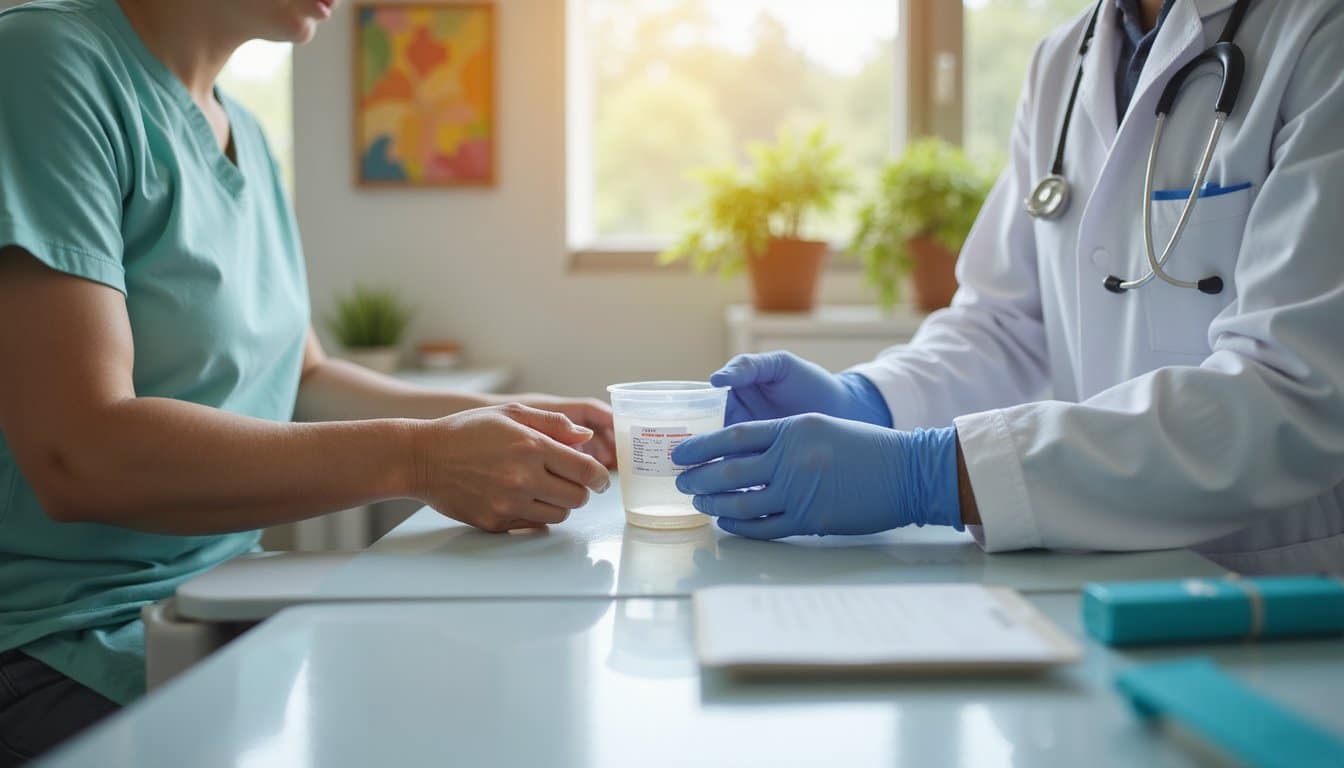
Thorough medical testing and laboratory analysis form the foundation of effective outpatient detoxification monitoring. Your healthcare provider will primarily rely on urine analysis using EMIT immunoassay for routine screening, as it’s cost-effective at $5 per test and provides rapid results. While EMIT may yield false positives due to cross-reactivity with over-the-counter medications, it’s suitable for regular monitoring needs. Testing frequency is typically highest during the initial treatment phase, requiring screenings every 3-7 days. Treatment follow-up includes regular lab testing to monitor progress and prevent relapse. Liver function tests are routinely performed to assess treatment compliance and overall health status during recovery.
For cases requiring absolute testing accuracy, especially those with legal implications, your provider will utilize GC/MS confirmation testing. Though more expensive at $25-100 per test, GC/MS represents the gold standard with minimal false positives. When substance-specific detection is essential, your provider may opt for TDx fluorescent polarization immunoassay, which offers enhanced specificity while balancing cost and precision.
Medication Management and Safety Measures
Effective medication management during outpatient detox requires precise timing and individualized dosing protocols to secure patient safety. You’ll need to start medications like buprenorphine 12-18 hours after your last short-acting opioid use, or 24 hours for long-acting opioids. Daily monitoring visits are required for up to five days after your last drink to ensure proper recovery progress. Your provider will adjust doses based on your symptoms while following strict FDA guidelines. A calm environment should be maintained to help minimize withdrawal discomfort.
To promote medication adherence, you’ll receive extended-release options when appropriate and combine pharmacotherapy with behavioral support. Overdose prevention remains critical, you’ll get mandatory naloxone training and emergency response education. Your doctor will provide you with a naloxone kit and teach you to recognize overdose signs like bluish lips or slowed breathing. They’ll also develop a personalized prevention plan based on your specific risk factors and medical history.
Remote Monitoring Technologies and Tools

Remote monitoring technologies have revolutionized outpatient detox by enabling real-time tracking of your recovery progress. Through wearable devices like smartbands and biosensors, medical teams can monitor your vital signs, sleep patterns, and activity levels 24/7. These devices detect potential warning signs, from irregular heart rates to sudden behavioral changes that might indicate relapse risks. FDA-approved devices integrated with clinical monitoring platforms ensure data accuracy and reliability.
Your healthcare providers utilize cloud-based data integration systems to analyze multiple streams of information, including breath alcohol readings, biometric measurements, and behavioral patterns. The widespread adoption of telehealth services has made this monitoring more accessible and efficient than ever before. They’ll receive automated alerts if you experience concerning symptoms or deviations from your baseline health metrics. Advanced predictive analytics help your medical team identify potential complications before they become serious, allowing for swift intervention when needed. Medical staff can also monitor your Activities of Daily Living to assess your overall well-being and functional status. This thorough monitoring approach guarantees you’re receiving appropriate support throughout your outpatient detox journey.
Emergency Response and Safety Protocols
Safety during outpatient detox requires robust emergency response protocols to manage potential medical crises. Medical professionals must distinguish between intoxication assessment and withdrawal management to provide appropriate care. You’ll receive continuous monitoring through telemedicine and in-person evaluations to guarantee your safety throughout the process. Detox nurse all nurses are trained to recognize signs of both intoxication and withdrawal, ensuring that each patient receives the necessary attention tailored to their unique situation. With a focus on both physical and psychological well-being, these professionals play a critical role in facilitating a safe transition through the detox process. They also provide education on post-detox care, empowering patients with knowledge for their recovery journey.
- Your provider will conduct mandatory suicidality screenings and assess your risk level during both the intoxication and withdrawal phases
- If you’re experiencing severe symptoms, you’ll need immediate referral to emergency services rather than continuing outpatient care
- Your medication dosing will be carefully adjusted based on your response, with options like chlordiazepoxide administered on a flexible schedule
- You’ll have access to peer support systems and family integration programs to strengthen your safety net during outpatient treatment
Treatment Progress Tracking and Care Transitions
Building on established safety protocols, thorough progress tracking forms the backbone of successful outpatient detox programs. You’ll participate in daily self-assessments that monitor your symptoms, cravings, and emotional state, while your healthcare team tracks treatment milestones through automated data collection systems. Research shows that patients receiving symptom severity feedback demonstrate 28% greater improvement in treatment outcomes. Building on established safety protocols, thorough progress tracking forms the backbone of successful outpatient detox programs. You’ll participate in daily self-assessments that monitor your symptoms, cravings, and emotional state, while your healthcare team tracks treatment milestones through automated data collection systems, an approach that helps clinicians evaluate how do you detox from benzos safely within a medically supervised framework rather than through unsupervised withdrawal. Research shows that patients receiving symptom severity feedback demonstrate 28% greater improvement in treatment outcomes.
The INSIGHT Addiction platform integrates your progress metrics, allowing clinicians to adjust your care plan based on real-time patient feedback and recovery indicators. You’ll maintain a daily calendar marking significant events and triggers, helping you visualize your journey and identify effective coping strategies. Implementation of structured procedures has shown dramatic improvements in follow-up contact rates from 57.6% to 100%. Post-treatment follow-ups, achieving over 80% contact rates, guarantee sustained recovery through structured monitoring and support.
This extensive tracking system enables your care team to make evidence-based decisions about treatment changes and long-term recovery planning.
Somewhere inside you, there is a life worth returning to. New Jersey drug rehab connects you with New Jersey’s most compassionate and experienced treatment professionals who are passionate about helping you find your way back to it. We carefully match you with trusted resources designed around your unique journey, whether that means medically supervised detox, the focused care of residential treatment, the freedom of flexible outpatient programs, or the stability of long-term recovery support. Healing is not something that happens to you. It is something that happens for you, with the right people by your side. Call +1-844-866-4590 today and let us help you reclaim the life you were always meant to live.
Frequently Asked Questions
How Long Does Outpatient Detox Typically Take to Complete?
Your outpatient detox duration typically ranges from 30 to 90 days, with specific treatment phases varying based on your individual needs and substance type. While general substance use disorders average 81 days to complete, opioid-related programs often extend to 113 days. The National Institute on Drug Abuse recommends you stay in treatment for at least 90 days, as research shows shorter treatment phases have limited success in maintaining long-term recovery.
What Happens if a Patient Misses Scheduled Monitoring Appointments?
If you miss scheduled monitoring appointments, you’re compromising your patient accountability and relapse prevention efforts. Your medical team can’t properly assess withdrawal symptoms, adjust medications, or identify potential complications. You’ll risk violating treatment protocols, which could lead to removal from outpatient care and require a shift to inpatient detox. Missed appointments may also affect your insurance coverage and disrupt your medication management schedule, potentially endangering your safety and recovery progress.
Can Patients Continue Working While Undergoing Outpatient Detox?
Yes, you can continue working during outpatient detox, as treatment flexibility is a key advantage of this program. You’ll receive structured clinical care that works around your professional schedule, allowing you to maintain your work-life balance. However, you’ll need to manage your time effectively to attend required monitoring sessions and therapy appointments. The program is specifically designed to help you maintain employment while pursuing recovery.
Are Insurance Companies Likely to Cover Outpatient Detox Programs?
Yes, you’re likely to get insurance coverage for outpatient programs, as both private insurance and public programs like Medicaid typically cover these services. Under the Affordable Care Act, insurers must provide coverage for substance use disorders comparable to general medical care. However, you’ll need to verify that your provider is in-network and meets accreditation standards. You may still face some out-of-pocket costs through deductibles and copays.
What Percentage of Patients Successfully Complete Outpatient Detox Programs?
Based on national data, you’ll find that about 43% of patients successfully complete outpatient detox programs, with success rates varying by patient demographics. White clients achieve a 46.25% completion rate, while Latino clients complete at 45.55%, and Black clients at 37.49%. You’ll see higher success rates for specific substances; alcohol patients show better outcomes with 76% maintaining sobriety at 3 months post-treatment, while MAT patients for opioids achieve 41% completion.