

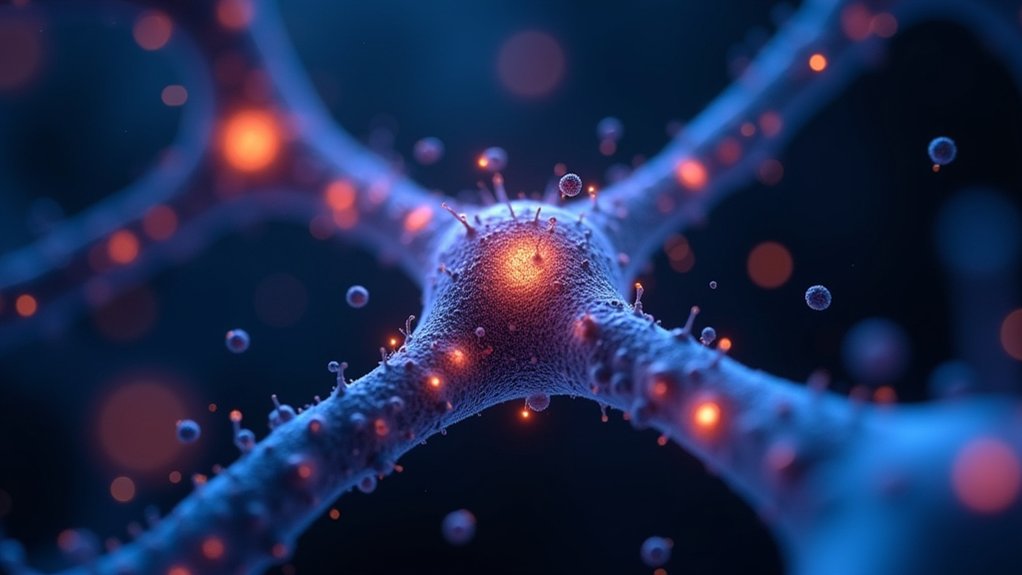



Dopamine isn’t inherently addictive, it’s a neurotransmitter your brain naturally produces to signal reward and drive motivation. However, addictive substances hijack this system by triggering dopamine surges 2–10 times greater than natural rewards. Your brain responds by reducing D2 receptors, creating a deficit state where you’ll need more stimulation just to feel normal. This downregulation explains why cravings intensify even as pleasure diminishes, and understanding these mechanisms reveals why some people are more vulnerable than others. This biochemical alteration not only impacts individual behavior but also shapes the societal perceptions surrounding addiction. As researchers explore dopamine’s relation to addiction, they uncover the complexities of not only biological but also psychological and environmental factors that contribute to substance misuse.
What Dopamine Actually Does in Your Brain
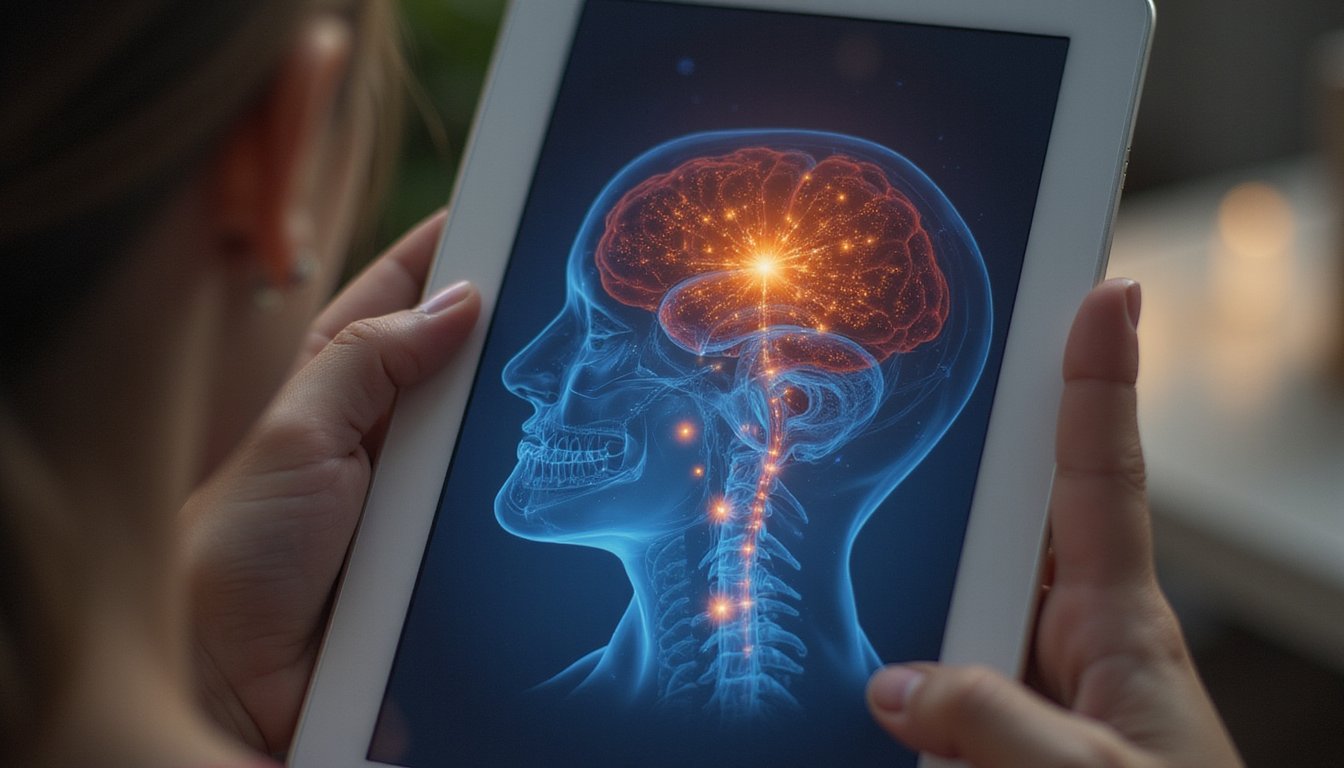
Dopamine functions as a neurotransmitter and hormone that transmits signals between neurons throughout your brain and body. Your dopaminergic neurons produce it primarily in two midbrain regions: the substantia nigra and ventral tegmental area (VTA). It operates through five G-protein-coupled receptors divided into D1-like and D2-like families. Chemically, dopamine is composed of a benzene ring, two hydroxyl side groups, and an amine group.
Your brain uses dopamine across multiple systems. The nigrostriatal pathway controls smooth, coordinated movement. The mesolimbic pathway drives reward conditioning by releasing dopamine from the VTA to your nucleus accumbens during rewarding experiences. This creates the reward reinforcement cycle that strengthens behaviors leading to positive outcomes. In your prefrontal cortex, dopamine regulates attention, working memory, and decision-making. VTA projections to your hippocampus support memory consolidation and learning, particularly for reward-related experiences. Your brain maintains balanced dopamine levels through presynaptic autoreceptors that provide inhibitory feedback when dopamine concentrations rise too high. Once released, dopamine is broken down into inactive metabolites, with homovanillic acid being the main end-product that your body excretes through urine.
How Addictive Drugs Hijack the Reward System
When you use addictive drugs, they flood your reward circuits with dopamine levels up to ten times higher than natural rewards produce. This massive surge causes your brain to “tag” the experience as critically important, strengthening the neural connections between the drug’s effects and everything associated with it, the people, places, and objects present during use. Over time, these environmental cues alone can trigger dopamine release and intense cravings, driving compulsive drug-seeking behavior even when the high itself has become diminished. This process occurs because the reward system evolved to help animals maximize contact with beneficial stimuli, but addictive substances exploit this mechanism by creating extrinsic rewards through classical conditioning with the drug’s intense effects. Additionally, continued long-term use causes the brain to reduce its dopamine receptors, which is associated with impulsive behavior and an inability to experience pleasure from everyday activities. Chronic drug exposure also triggers changes in the extended amygdala, resulting in negative emotional states that further perpetuate the cycle of drug taking.
Dopamine Surges Override Normal
Under normal conditions, your brain’s reward system releases dopamine in measured bursts, enough to reinforce survival behaviors like eating and social bonding, but not so much that it overwhelms the circuit.
Addictive substances disrupt this balance through three key mechanisms:
- Magnitude: Drugs trigger dopamine surges 2–10 times greater than natural rewards produce.
- Duration: Cocaine blocks reuptake while amphetamines reverse transporters, prolonging synaptic dopamine exposure.
- Priority shift: Your brain begins ranking drug use above survival-related activities.
This artificial overstimulation corrupts the dopamine reinforcement cycle. Your nucleus accumbens receives signals indicating the drug delivers extraordinary value, encoding it as essential. The result is intensified dopamine seeking behavior that overrides normal reward processing. Your brain now treats the substance as more important than food, relationships, or safety.
Cues Trigger Compulsive Seeking
Beyond the initial surge, your brain starts encoding environmental details present during drug exposure, locations, people, paraphernalia, even specific times of day. These associations form through intense dopamine surges that create lasting neural patterns. When you encounter these cues later, your ventral tegmental area activates, releasing dopamine as if you’d actually consumed the substance.
| Cue Type | Brain Response | Behavioral Effect |
|---|---|---|
| Visual triggers | VTA dopamine release | Immediate craving |
| Environmental context | Nucleus accumbens activation | Compulsive seeking |
| Temporal associations | Reward circuit firing | Relapse vulnerability |
This cue-induced craving operates independently of conscious choice. Your dopamine craving patterns become encoded so deeply that exposure to drug-associated stimuli overrides rational decision-making. Over time, memories of drug rewards intensify while negative consequences fade from neural encoding, perpetuating the cycle. This explains why seeking the addictive substance becomes driven by habit rather than conscious, rational decisions.
Drug-Induced Dopamine Surges Versus Natural Rewards

Although natural rewards like food, sex, and social connection produce moderate dopamine increases in the brain’s reward circuitry, addictive drugs generate surges up to 10 times higher, reaching 150–1000% above baseline levels in regions like the nucleus accumbens.
Addictive drugs hijack your brain’s reward system, flooding it with up to 10 times more dopamine than nature ever intended.
This disparity creates reward imbalance brain states through three key mechanisms:
- Speed: Drugs produce immediate dopamine release, especially when smoked or injected, bypassing natural regulatory delays.
- Duration: Drug-induced signaling persists longer than natural rewards, which terminate after behavioral satiation.
- Intensity: The magnitude overwhelms self-regulatory systems designed for moderate stimulation.
Your brain’s reinforcement learning systems encode these disproportionate responses, strengthening drug-reward associations far beyond natural experiences. This process establishes dopamine dependence patterns where drug-related cues become prioritized over biological necessities, driving compulsive seeking behaviors despite negative consequences. Over time, addiction may develop because sensitized DA-related systems cause increased “wanting” of drugs even when the pleasurable effects diminish. As addiction progresses, chronic substance abuse can reduce dopamine receptor availability by up to 25%, making the brain increasingly dependent on drugs to experience any reward. This reduction occurs because the brain adjusts to overwhelming surges by decreasing dopamine production or reducing the number of available receptors.
The Dopamine Deficit State and Receptor Downregulation
When you repeatedly flood your brain with dopamine through drugs or intense stimuli, your D2 receptors undergo downregulation, a process where receptor availability decreases through internalization and reduced synthesis. This adaptation leaves you with a blunted pleasure response, meaning normal rewards no longer generate sufficient dopamine signaling to feel satisfying. The result is a reward circuit imbalance where you need progressively stronger stimuli to achieve the same level of motivation and emotional response you once experienced naturally. Since the dopamine transporter controls spatial and temporal dynamics of dopamine neurotransmission, these regulatory changes fundamentally alter how your brain processes reward signals. Research shows that D2 receptor activation has inhibitory effects on vascular smooth muscle, demonstrating that dopamine receptor changes can have widespread physiological consequences beyond just the brain’s reward circuitry.
D2 Receptor Downregulation
Because chronic drug exposure floods the brain with dopamine, the reward system compensates by reducing its sensitivity, a process driven largely by D2 receptor downregulation in the striatum. This dopamine neuroplasticity occurs across multiple substance use disorders, including cocaine, methamphetamine, alcohol, and opioid addiction.
The consequences of reduced D2R availability include:
- Decreased baseline metabolism in the orbitofrontal cortex, anterior cingulate cortex, and dorsolateral prefrontal cortex
- Impaired inhibitory control and disrupted decision-making processes
- Compulsive drug-seeking behavior patterns
You experience this dopamine adaptation cycle through a shift in your D1R:D2R signaling ratio toward D1R dominance. GASP-1 protein mediates this process by targeting internalized D2 receptors for lysosomal degradation. Studies show that blocking GASP-1 prevents cocaine-induced D2R downregulation and reduces behavioral sensitization, confirming its mechanistic role. Research demonstrates that D2R antagonists block the development but not the expression of cocaine sensitization, highlighting the critical window during which receptor changes become established. At the molecular level, reduced D2R expression in indirect pathway medium spiny neurons triggers upregulation of genes involved in GABA synthesis, cAMP signaling, and neurite growth, revealing a broad transcriptional response to dopamine receptor loss. Notably, individuals with lower NAc D2/3R availability tend to exhibit higher physical activity levels, suggesting that receptor downregulation may alter motivation for natural rewards and daily behavioral rhythms.
Blunted Pleasure Response
As D2 receptor downregulation progresses, your brain enters a dopamine deficit state that manifests clinically as anhedonia, a blunted ability to experience pleasure, diminished interest in previously rewarding activities, and loss of motivation.
PET imaging reveals reduced dopamine transporter binding and lower homovanillic acid levels in anhedonic states, confirming decreased synaptic dopamine release. Your reward sensitivity changes fundamentally, fMRI studies show diminished striatal responses to pleasurable stimuli. These pleasure deficit responses extend beyond momentary enjoyment; they impair reward anticipation, learning, and effort-based decision-making. This blunted dopamine phenotype persists for months following abstinence, indicating that recovery of normal reward function requires extended time.
The dopamine system governs “wanting” rather than just “liking.” When it’s compromised, you’ll experience blunted pursuit of natural rewards like social interactions, hobbies, and work goals lose their motivational pull. This creates persistent negative mood, apathy, and decreased goal-directed behavior that characterizes the anhedonic state.
Reward Circuit Imbalance
The dopamine deficit state represents a fundamental neuroadaptation that develops when chronic overstimulation depletes your brain’s reward circuitry. PET imaging confirms that addicted individuals exhibit noticeably lower baseline dopamine levels in the striatum compared to controls, even during protracted withdrawal. This deficiency not only hampers the ability to experience pleasure from natural rewards but also drives the compulsive drug-seeking behavior that characterizes addiction. Understanding dopamine’s role in drug addiction is crucial, as it highlights how the brain’s reward pathways become hijacked by substances, leading to a cycle of craving and use that can be difficult to break.
This hypodopaminergic state triggers three critical changes:
- D2 receptor downregulation reduces your postsynaptic sensitivity to dopamine signaling
- Frontal cortex hypometabolism impairs executive control in the OFC, ACC, and DLPFC
- Corticostriatal imbalance shifts dominance from cognitive regulation to habitual responses
These mechanisms explain how behavioral addiction dopamine pathways become dysregulated. Your brain’s compensatory response to excessive stimulation creates dopamine habit loops that persist beyond acute exposure. The resulting circuit imbalance between hyperactive drug-conditioned responses and hypoactive prefrontal control systems drives compulsive behavior patterns. This dysregulation not only reinforces the cycle of addiction but also makes it increasingly challenging to regain control over one’s impulses. Understanding the causes of dopamine addiction is crucial for developing effective treatment strategies and therapeutic interventions.
How Dopamine Shapes Habits and Compulsive Behaviors
When you repeat a behavior that feels rewarding, dopamine acts as a teaching signal that strengthens the neural pathways connecting that action to its outcome. This process occurs through reward prediction error, the difference between expected and actual reward, encoded by dopaminergic neurons in your striatum.
As dopamine-triggered behaviors become routine, control shifts from goal-directed regions (dorsomedial striatum) to habit circuits (dorsolateral striatum). This migration makes actions increasingly automatic, explaining why nearly half of daily behaviors operate as habits.
With continued repetition, tolerance behaviors dopamine circuits facilitate emerge. Your brain requires less conscious reward to maintain the behavior, yet the compulsive pattern persists. Action prediction error signals continue reinforcing stimulus-action associations even without explicit reward, creating stable habits resistant to change despite negative consequences.
Digital Dopamine and the Rise of Behavioral Addictions

Because digital platforms deliver rewards at unprecedented speed and frequency, they’ve created what researchers now call “digital dopamine”, rapid, repeated dopamine spikes triggered by likes, notifications, and in-game achievements that closely mirror reinforcement patterns seen in substance addictions.
Digital platforms hijack your brain’s reward system, delivering dopamine hits that mirror the reinforcement patterns of substance addiction.
Compulsive behavior neuroscience reveals three key mechanisms driving digital addiction:
- Tolerance development, neuroimaging shows increased dopamine secretion with reduced receptor availability in the striatum, paralleling drug addiction patterns
- Withdrawal states, when you sign off, your brain enters a dopamine-deficit state, causing irritability and anxiety
- Cue-reactivity, infinite scroll and push notifications strengthen the dopamine expectation cycle, shortening intervals between hits
The scale is significant: approximately 210 million people globally meet criteria for social media addiction, with 78% of U.S. users aged 18–24 reporting addictive patterns.
Risk Factors That Make Some People More Vulnerable
Not everyone faces the same risk of developing dopamine-driven addictive behaviors, and research now identifies specific biological, psychological, and environmental factors that create heightened vulnerability. Genetic factors account for 40–60% of overall addiction risk, with inherited differences in dopamine receptor density playing a central role. Lower baseline D2 receptor availability correlates with increased impulsivity and compulsive drug seeking.
| Risk Category | Key Vulnerability Marker |
|---|---|
| Genetic | Reduced D2 receptor density |
| Psychological | High trait impulsivity |
| Environmental | Chronic stress exposure |
Your neurobiological vulnerability increases considerably if you experienced adolescent drug exposure or early-life social stressors. During adolescence, your prefrontal control systems remain incompletely developed while reward sensitivity peaks. This combination amplifies dopamine-driven risk-taking and strengthens pathways toward addictive patterns. Addressing these vulnerabilities often requires comprehensive interventions, including detox programs that can help mitigate the effects of early drug exposure. By providing a structured environment for recovery, detox programs assist individuals in navigating withdrawal symptoms while simultaneously fostering healthier coping mechanisms.
Frequently Asked Questions
Can You Become Addicted to Dopamine Supplements or Medications?
You can develop behavioral addictions from dopamine agonist medications like pramipexole, which stimulate reward circuits and trigger impulse control disorders such as pathological gambling, compulsive shopping, or hypersexuality. These risks increase with higher doses. Prescription stimulants carry low addiction risk at therapeutic doses but become dangerous when misused. Most dopamine-focused supplements cause only subtle modulation, not the rapid dopamine spikes that drive classical addiction. Your vulnerability depends on dose, delivery method, and individual risk factors.
Does Dopamine Detox Actually Reset Your Brain’s Reward System?
Dopamine detox doesn’t literally reset your brain’s reward system, it’s a behavioral strategy, not a neurochemical intervention. However, when you temporarily abstain from hyper-stimulating activities, you can reduce tolerance built up in your dopamine receptors. This recalibration improves your sensitivity to natural rewards like conversation and food. Research shows reduced screen time enhances attention and mood, suggesting improved reward circuit function. The “reset” metaphor oversimplifies complex neurobiology, but the behavioral benefits are measurable.
How Long Does It Take for Dopamine Receptors to Return to Normal?
Your dopamine receptors typically need 3–18 months to return toward normal, depending on the substance and usage severity. You’ll see dopamine levels begin rebalancing around 90 days of abstinence, but receptor sensitivity and signaling pathways take longer. Stimulants like cocaine and methamphetamine require the longest recovery, often 12–18 months for full receptor restoration. You’ll notice improvements in mood and impulse control around 6 months, with continued normalization extending beyond one year.
Can Exercise or Meditation Increase Dopamine Without Causing Dependence?
Yes, you can increase dopamine through exercise and meditation without developing dependence. Exercise boosts D2/D3 receptor availability and dopamine synthesis while producing self-limiting, homeostatic changes, not the tolerance patterns seen in addiction. Meditation similarly enhances striatal dopamine release during focused attention but reduces craving circuits rather than reinforcing compulsive seeking. Both activities modulate your reward system toward resilience, actually lowering addiction vulnerability rather than creating new dependence pathways.
Are Some People Born With Naturally Lower Dopamine Levels?
Yes, you can be born with genetically lower dopamine levels. Specific polymorphisms in genes like COMT, DRD2, DRD4, DAT1, and tyrosine hydroxylase directly influence your dopamine synthesis, release, and receptor function. These variants create measurable differences in baseline dopaminergic tone. If you carry alleles associated with reduced dopamine neurotransmission, you’ll likely show lower ventral striatal reward reactivity, weaker reinforcement learning, and potentially greater susceptibility to motivation-related challenges from birth.